Short version When you compare a production builder’s base home to a true custom build, the differences live in three places: what you can see (cabinets, trim, tile, paint, finish quality), what you can’t see (framing, insulation, windows, HVAC), and what you can change (the freedom to lay out a plan around your lot and the way you actually live). A well-spec’d custom builder will include — at the base — most of the upgrades a production buyer ends up paying extra for. From there you can keep going as far as your taste and budget take you. Here’s where the dollars actually go when you move from builder-grade to custom in the Triangle, with specifics from how we spec a Hornet build.
What is a builder-grade home?
A builder-grade home is finished with a production builder’s standard package — the base materials and finishes included in the advertised price, chosen to hit that price and repeat across many homes. In a typical production base, that means hollow-door cabinetry with no soft-close, 3-1/4″ baseboards, a fiberglass tub surround, textured “orange peel” walls, and ceilings that drop to 8 feet upstairs. Most of the upgrades a production buyer ends up wanting then cost extra. A home feels custom when that baseline starts higher — and when the plan is built around your lot and the way you actually live.
So what actually changes between builder-grade and custom?
Three things. First, quality of materials and finishes — a custom builder typically starts with better-grade cabinets, trim, windows, flooring, and fixtures. Second, how the home is built — heavier framing, better insulation packages, name-brand HVAC, and structural details a production schedule doesn’t usually allow. Third, flexibility — the freedom to modify the floor plan, change ceiling heights, reconfigure the primary suite, or design around the specific lot. Production builders optimize for repeatability; custom builders optimize for fit. That’s where the cost difference comes from, and it’s where most of the long-term value lives.
| Item | Typical builder-grade | Every Hornet home |
|---|---|---|
| Cabinets | Hollow-door, no soft-close | Aristokraft with soft-close doors throughout; 42″ kitchen uppers with crown molding |
| Countertops | Commonly an upgrade | Quartz or granite in the kitchen and every bathroom |
| Flooring | Commonly an upgrade | Mohawk PureTech LVP, whole home |
| Baseboards & trim | 3-1/4″ baseboards | 1×6 baseboards, 1×4 door casings |
| Tub & shower | Fiberglass tub surround | Full tile surrounds in every full bath; tile shower pan in the primary |
| Walls & paint | Textured “orange peel” walls | Smooth-finish walls; three-tone Sherwin-Williams paint |
| Ceiling height | 9 ft on the main floor, 8 ft upstairs | 9 ft minimum on every floor |
| Appliances | Commonly an upgrade | Stainless Frigidaire range, microwave, and dishwasher |
“Commonly an upgrade” = what production buyers typically pay extra for. The Hornet column is our included spec on every home — walk it room by room, or see the construction spec.
Where do the differences live in what you see?
The most visible delta is in cabinets, trim, and finish work. A typical production base includes hollow-door cabinetry with no soft-close, 3-1/4″ baseboards, and a fiberglass tub surround. A custom base — including what we include on every Hornet home — runs Aristokraft full or partial-overlay cabinetry with soft-close doors throughout, 42″ upper kitchen cabinets with crown molding, 1×6 baseboards, 1×4 door casings, full tile shower and tub surrounds in every full bathroom, a tile shower pan in the primary, and frameless polished-edge mirrors.
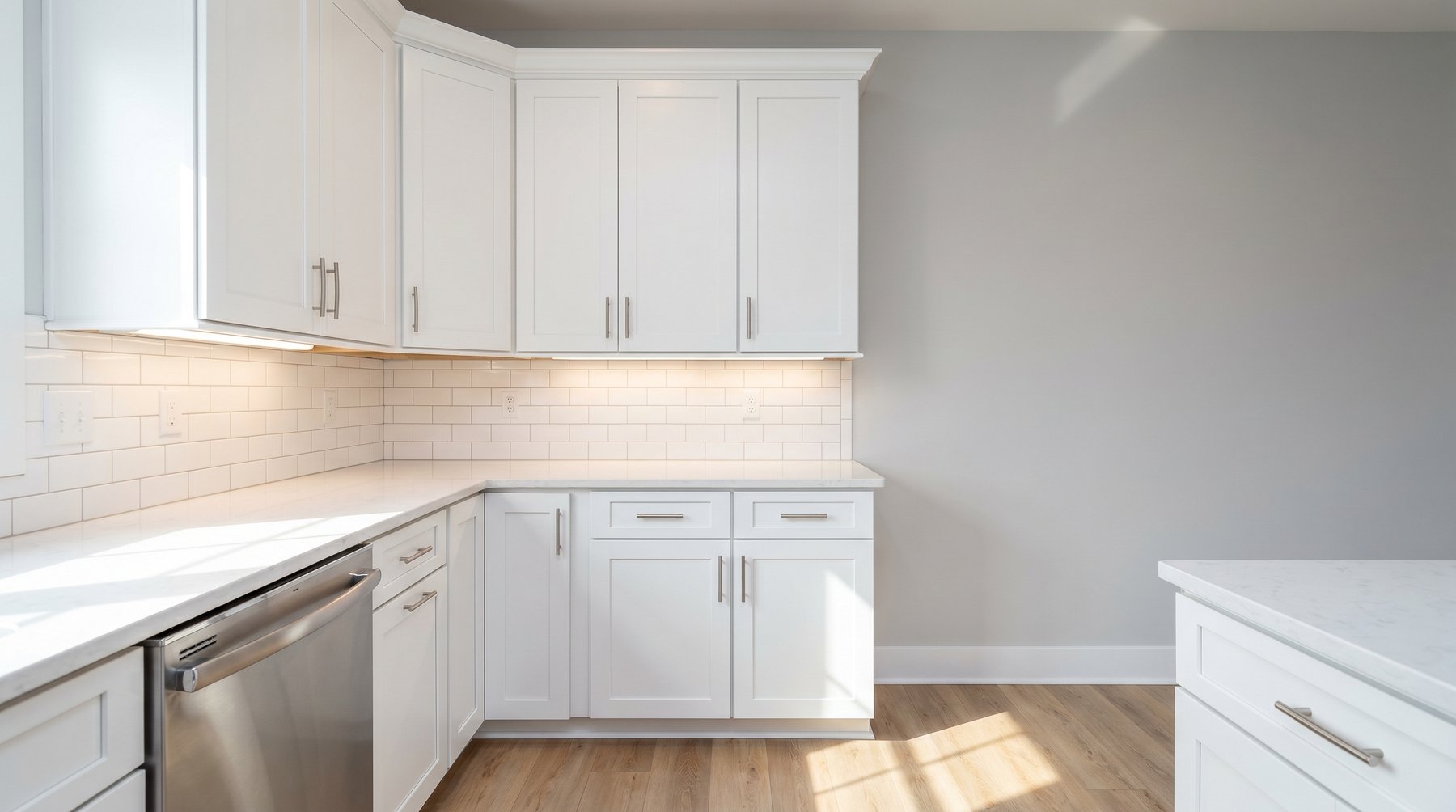
Smooth-finish walls (instead of the textured “orange peel” finish you see in most production homes) and a three-tone Sherwin-Williams paint scheme — walls, ceiling, and trim each their own color — are two more details that change how a finished home looks and feels without changing the floor plan at all. Custom built-in painted shelving in the primary closet and pantry is another one of those touches that sounds small until you’ve lived with the alternative.
Where do the differences live in what you can’t see?
This is where production builders quietly save money and custom builders quietly spend it. Our standard structural spec includes a rebar-reinforced crawl space foundation, engineered I-joists for a stronger, more stable floor system than basic dimensional lumber, a 3/4″ tongue-and-groove OSB subfloor, 2×4 exterior walls at 16″ on center, and 9-foot minimum ceiling heights on every floor — most production homes give you 9 feet on the main and drop to 8 feet upstairs. The home comes with an engineered roof system and a 10-year structural warranty. The energy package — R-15 walls, R-38 blown-in attic insulation, R-19 in the garage, PlyGem windows with a limited lifetime warranty, insulated fiberglass entry doors, and a high-efficiency Lennox HVAC system — sits at or above what most production base specs include. A buyer never sees the I-joists or the R-38 attic, but they feel them in the energy bill, the floor stability, and how the house holds up over twenty years.
What does a strong custom base spec actually look like?
This is where we try to remove a lot of guesswork. On every Hornet home — whether you’re building on your lot in Wake County or out toward Chatham or Nash — the included spec already covers what production buyers commonly upgrade into: whole-home Mohawk PureTech LVP flooring, quartz or granite countertops in the kitchen and every bathroom, stainless-steel Frigidaire range, microwave, and dishwasher, Schlage door hardware, 6″ LED flush mounts throughout, a Honeywell TH2320 Wi-Fi-enabled thermostat, a LiftMaster 6580L belt-drive garage opener with a built-in camera, CertainTeed Landmark architectural shingles, 5″ seamless aluminum gutters, and CertainTeed MainStreet vinyl siding or board & batten per plan. Sitework — survey, soil compaction testing, septic design, well drilling up to 300 feet, conventional septic installation, utility connections, lot clearing, and a starter landscaping package — is typically included in the construction scope, confirmed at a site visit. That’s our floor, not our ceiling, and it already lives well above what a production builder calls “base.” For the full line-by-line breakdown, see what’s included on every Hornet home.
A well-spec’d custom base already covers most of what production buyers pay extra for. The cost of moving up isn’t a longer upgrade sheet — it’s the freedom to build the home around your lot and the way you actually live.
Where can you keep going from there?
This is the part production builders can’t really offer. Once your starting spec is already strong, custom is the freedom to go further on the things that matter to you without paying twice. That can mean upgrading the cabinetry to a fully custom shop, swapping LVP for engineered hardwood, going to fiber cement siding, adding a screened porch off the primary suite, raising a ceiling, reconfiguring a kitchen layout, designing a primary closet around your actual wardrobe, or building around a specific view on the lot. None of that is “available as an option” on a production sheet — it doesn’t exist as a line item — because production schedules don’t bend that way. With a custom build, it’s just part of the conversation. Browse our floor plans to see the starting points — every one of them builds on this same included spec.
If you’re trying to figure out what a custom home in Raleigh, Apex, or anywhere else in the Triangle actually costs and where the dollars go for your specific build, reach out — we’ll walk through the spec and what changes when you adjust it. For more on the timeline side, see our post on how long a custom home actually takes. For what to look for before you put a lot under contract, see our post on what to actually look for in a buildable lot. And for the septic piece of the sitework picture, see our drain field deep-dive.
How Long Does It Take to Build a Custom Home?
More guides: The build
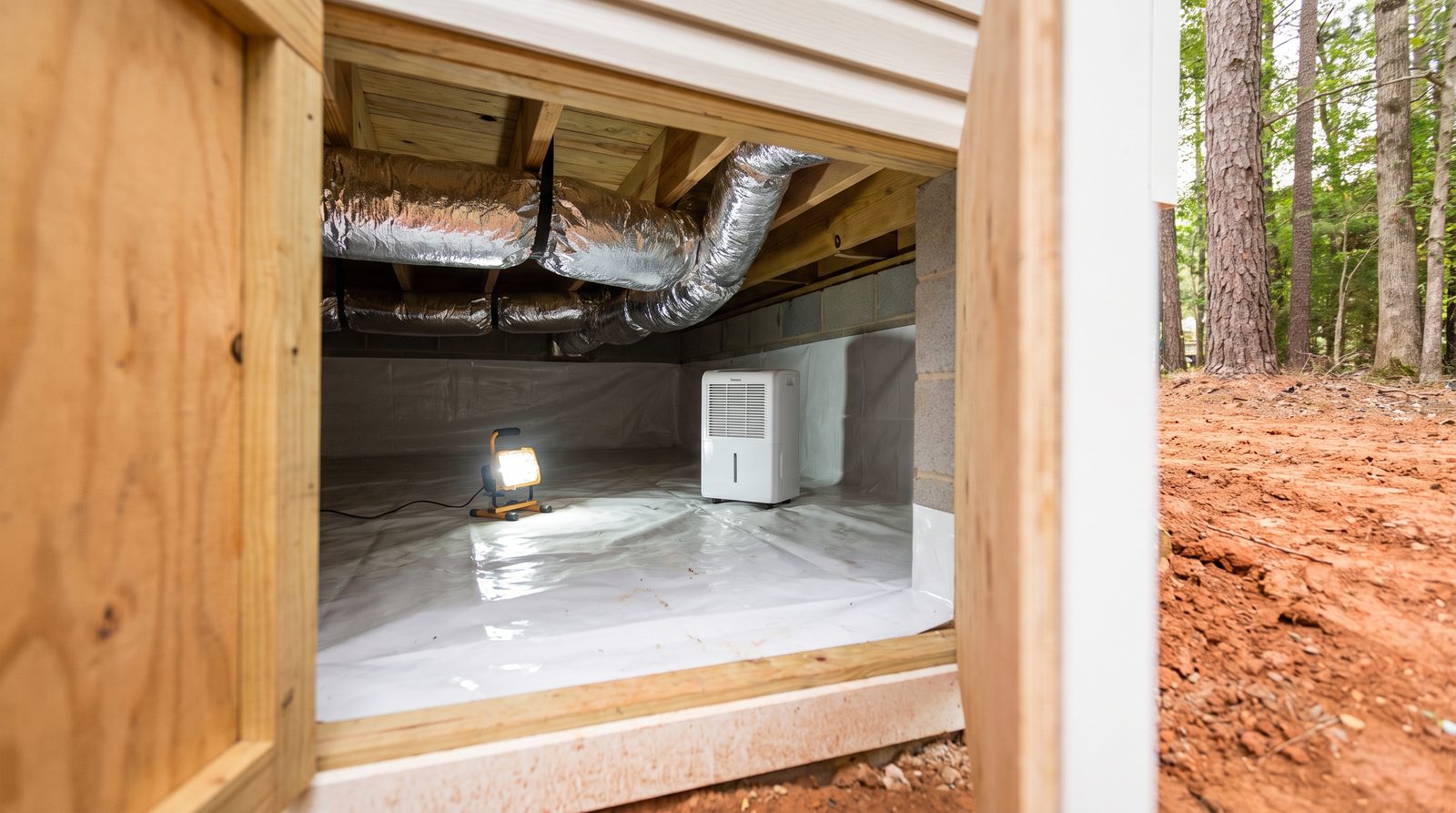
Crawl space or slab: what each means for a new Triangle home
What most new homes in the South sit on, what a closed crawl space is, what North Carolina's code asks of one, and what the foundation means for moisture, ducts and termites.
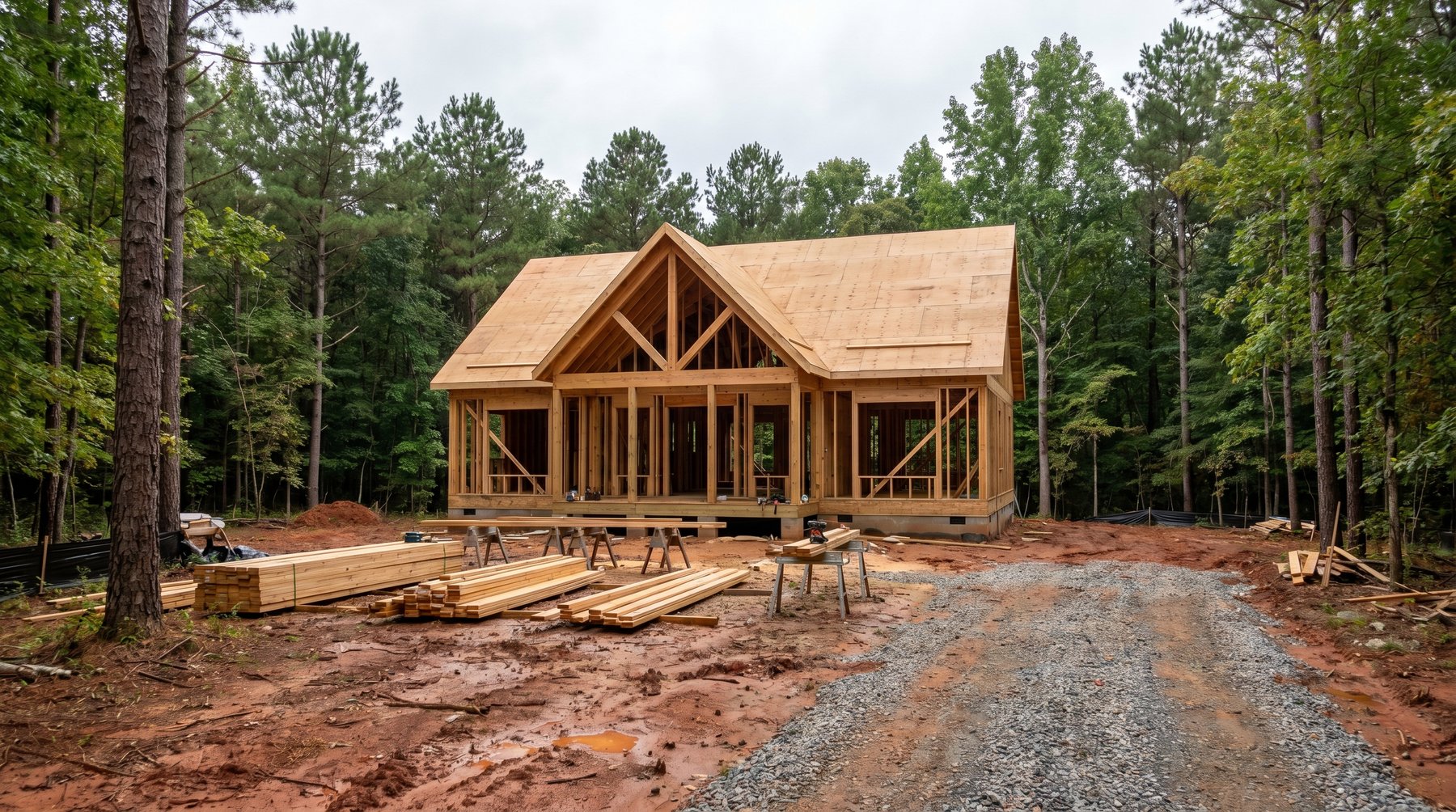
Custom Home Build Timeline: How Long Does It Take?
A realistic custom home build timeline: about 6 months from permit to keys, 9–12 months end to end. The month-by-month phases of a Triangle build — and what shifts the clock.
The Triangle Building Report
Once a month: what changed for building in the Triangle, and our newest guides. No spam, unsubscribe anytime.