Short version Two questions usually decide whether a Triangle lot will actually work for your custom home — does it perc and what's the topography. Custom build lots out here typically run on well and septic (in-fill lots inside city limits or tear-down properties can be the exception, where public utilities may already be at the street), so soil percolation drives a lot of the conversation. Tougher dirt tends to show up as you get closer to Durham or around the Jordan Lake area — not unbuildable, just something to verify early. East and northeast — Wake Forest, Zebulon, into Nash County — perc is generally easier, but floodplain and flood-prone soils start eating into your buildable area. Either way, plan for a bigger home site than you might expect, because your drain field has to live somewhere on the lot. Walking a property with a builder before you put it under contract is the fastest way to know whether the home you want will actually fit. Here's how we look at lots when a client brings us one.
Does the lot actually perc?
For most custom lots in the Triangle, this is the single most important question. "Perc" is short for percolation — whether the soil drains well enough for a septic drain field to function. A lot can look perfect from the road and fail the perc test, which makes it unbuildable for a standard residential septic system. We tend to see tougher dirt as you get closer to Durham and around the Jordan Lake area — that doesn't mean you can't build there, plenty of beautiful lots over that way do perc just fine, but it's worth verifying early instead of assuming.
Until 2019, this all had to run through the county environmental health department — they'd come out, evaluate the lot themselves, and issue an improvement permit telling you how many bedrooms the lot could support. That year, North Carolina authorized a faster path through what's called an AOWE (Authorized Onsite Wastewater Evaluator): we can now work through a licensed third-party soil engineer whose license carries the approval the county and state will accept. Either way, you end up with a bedroom count for the lot, and the rest of the design has to fit inside that number. Before you spend money on architects or surveys, get the perc question answered.
Two things worth knowing from the buying side. NC State Extension suggests getting the improvement permit before you buy a lot without sewer, or making the purchase depend on getting one — a real estate attorney can write that into your offer. And a septic permit can limit more than the bedroom count: it can also set where the house, the driveway or a pool can go. Septic permits are good for up to five years, so when you buy and when you build both matter.
If you already own the lot, hold off on clearing it yourself. Johnston County's environmental health office warns that disturbing or reshaping the soil while clearing can make a site unsuitable, or call for a more expensive system.
What about topography and floodplain?
East and northeast of Raleigh — Wake Forest, Knightdale, Zebulon, and out into Franklin and Nash counties — perc concerns generally ease up, but topography takes over as the main issue. A lot of those properties have low spots, wet-weather drainage, flood-prone soils, or sit partially inside a FEMA-designated floodplain. You can still build on tricky topography, but it can dramatically change foundation cost, which plan will fit, and where the house can be placed. Pull the FEMA flood map for the parcel and walk the low corners before you fall in love with it. Topography is worth paying attention to on any Triangle lot — not just the rural ones east of Raleigh.
Are you ready for well and septic?
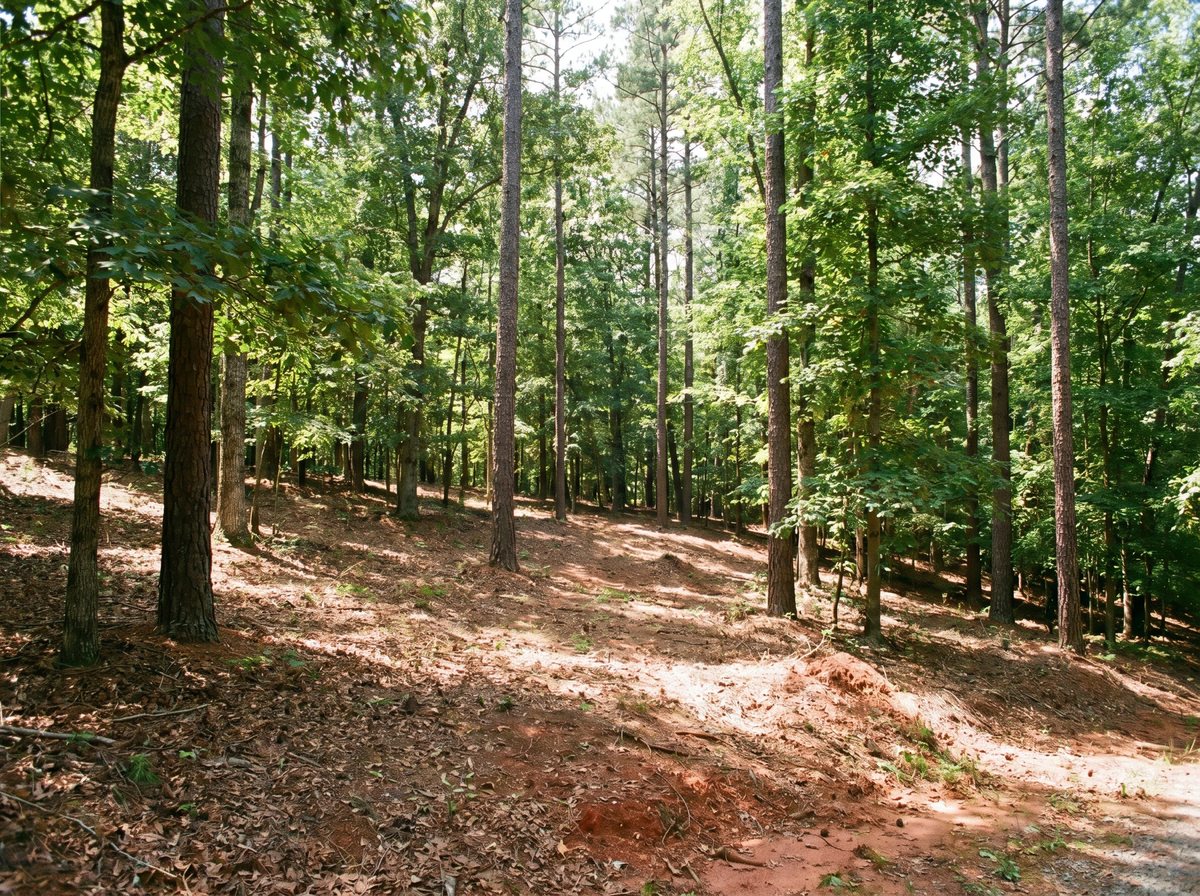
If you're used to buying a home where water and sewer are already at the curb, this is the biggest mindset shift. Custom build lots in the Triangle typically aren't in the kind of subdivisions where the developer has already run water and sewer to the property line — that's more the world of the big production neighborhoods. On a true custom lot you're usually planning around a well, a septic system, and sometimes propane instead of natural gas. In-fill lots inside city limits or tear-down properties replacing an older home can have public utilities, but it's not the norm. None of this is a problem; we build on well and septic constantly across our service area — Wake, Durham, Chatham, Johnston, Wilson, Nash, Franklin, and Granville counties. It just changes the cost stack, the timeline, and the type of lot you should be looking at.
The well has its own permit. The county health department permits it before anyone drills and inspects it afterward, and the water is tested within 30 days of that final inspection — for bacteria, nitrates and metals such as arsenic, lead and manganese, among others. State rules keep a well at least 50 feet from the septic tank and drain field (repair area included) and 25 feet from the house, so the well, the house and the septic area get laid out together. A well drilled to 300 feet and a conventional septic system are typically in our published price; footage past 300 feet is settled at drilling time.
What if town water and sewer are nearby?
A lot near the lines isn't always a lot that can connect. In the six towns where the City of Raleigh runs water and sewer — Garner, Knightdale, Rolesville, Wake Forest, Wendell and Zebulon — the lot has to be inside the town's extraterritorial jurisdiction (ETJ) or be annexed into the town, and where both water and sewer are available, the city requires connecting to both; a sewer-only connection generally isn't allowed. In Apex, a lot in the town's ETJ has to be annexed to get town water or sewer, and Apex sewer goes only to homes on town water. Out in unincorporated Johnston County, the county says its sewer depends on capacity downstream. Checking septic or public sewer is part of checking a lot, and that's our job as the builder. Connection to public water and sewer, where it's available, is typically in our published price.
How big does the lot really need to be?
Bigger than you'd think. When you're on septic, the drain field has to live on the lot — separate from the house footprint, away from the well, outside the setbacks, and with a repair area held in reserve in case the primary field ever fails. Depending on soils, that alone often pushes you toward an acre or more. There are ways to cut the required drain field footprint by as much as 50% with certain system designs — that's all normal, just something we plan for up front. One thing worth knowing: no permanent structures can sit on top of the drain field or the repair area, so detached garages, pools, and outbuildings have to work around them. Layer in tree save, setbacks, driveway routing, and how the house has to sit on the topography, and we've had clients fall in love with a lot only to find the home they wanted can't physically fit once everything is laid out on paper.
For a deeper look at how drain field size is determined, what the repair area requirement is, and which system designs allow for reduction, see our companion post on how big of a drain field you actually need for a custom home.
Should you walk a lot with a builder before you buy?
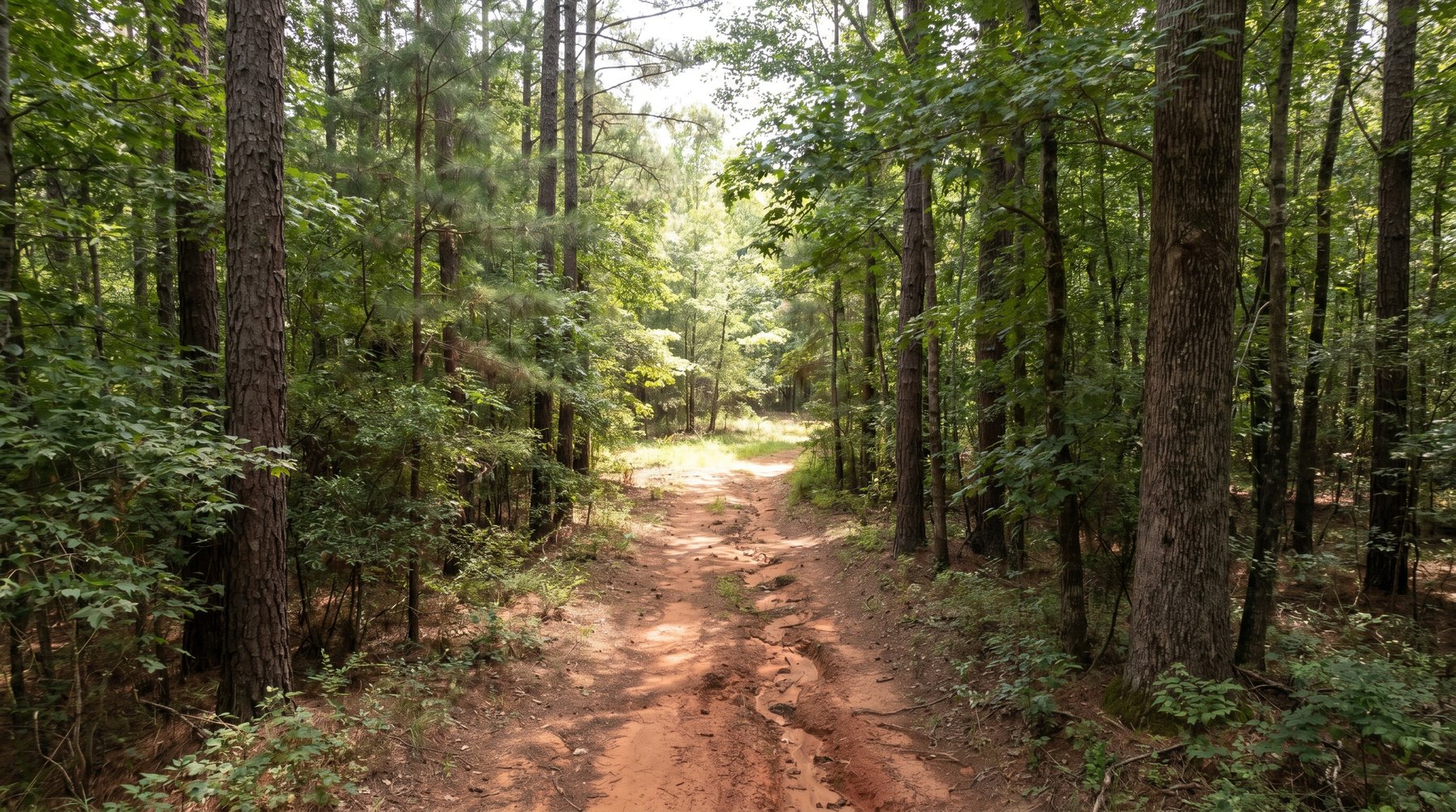
Yes. If you have a property you're seriously considering, we'll walk it with you and give you our professional opinion based on what we've seen across thirteen Triangle towns. A lot walk with a builder isn't a replacement for the soil engineer and surveyor work that happens during due diligence after you go under contract — but it's a fast, no-cost way to surface the obvious red flags before you write an offer.
Still looking? You can browse lots for sale across the Triangle on our land search. If you've got a Triangle lot you're thinking about and want a second set of eyes on it, reach out — we're happy to walk it with you. And once you do have a lot under contract, the broader build clock starts — see our companion post on how long a custom home in the Triangle actually takes for the full picture.
How Big of a Drain Field Do You Need for Your Custom Build?
More guides: Land
What a Triangle lot's covenants and HOA rules mean before you buy
Where a lot's covenants are recorded, what a North Carolina HOA can do about dues, fines and liens, and what a seller of an empty lot does and doesn't have to disclose.
How Big of a Drain Field Do You Need for Your Custom Build?
Drain field size is driven by two things — bedroom count and soil acceptance. Here’s how NC sizes residential septic, what the repair area requirement adds, and how T&J panels can cut the footprint by 50%.
The Triangle Building Report
Once a month: what changed for building in the Triangle, and our newest guides. No spam, unsubscribe anytime.