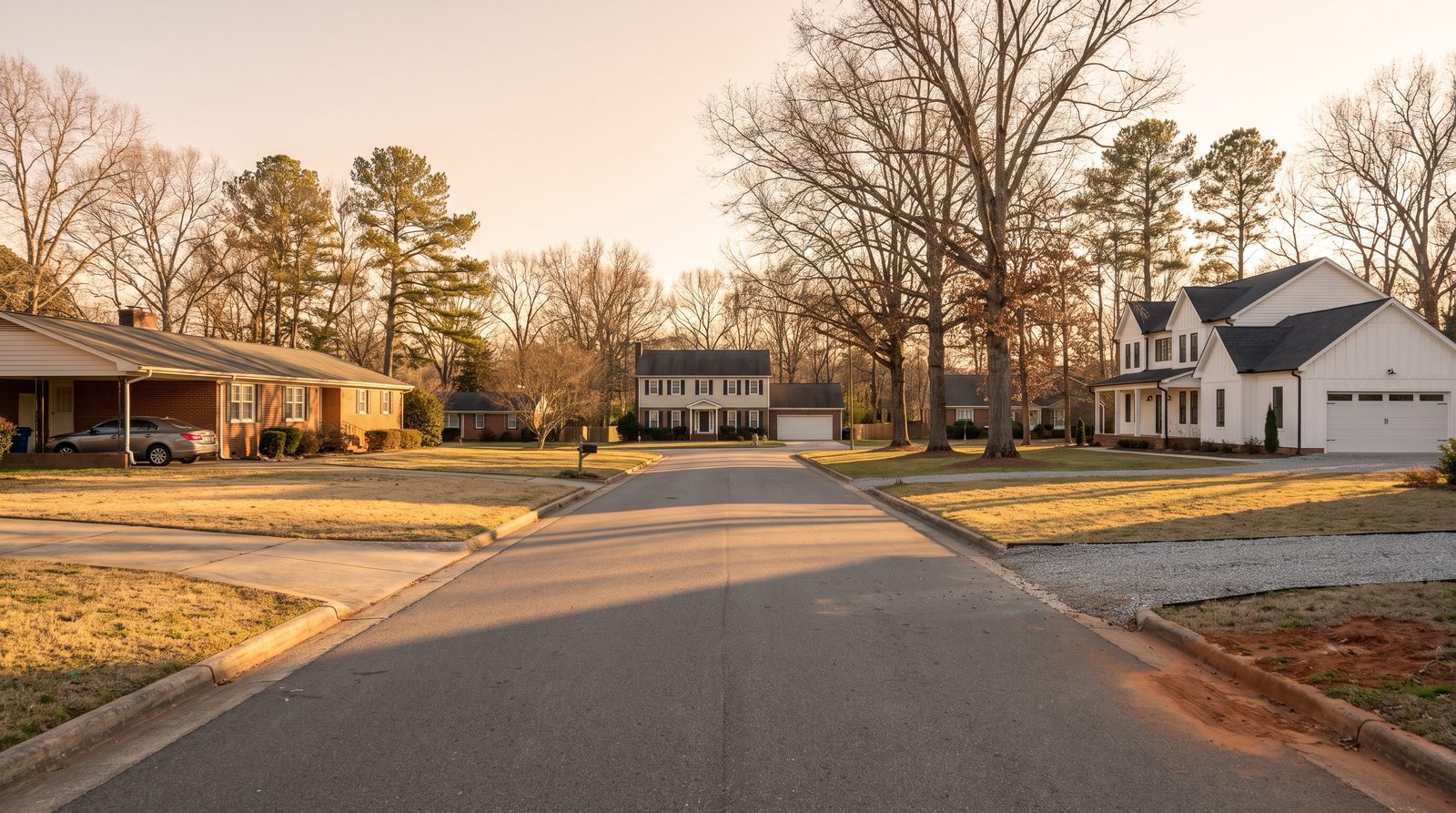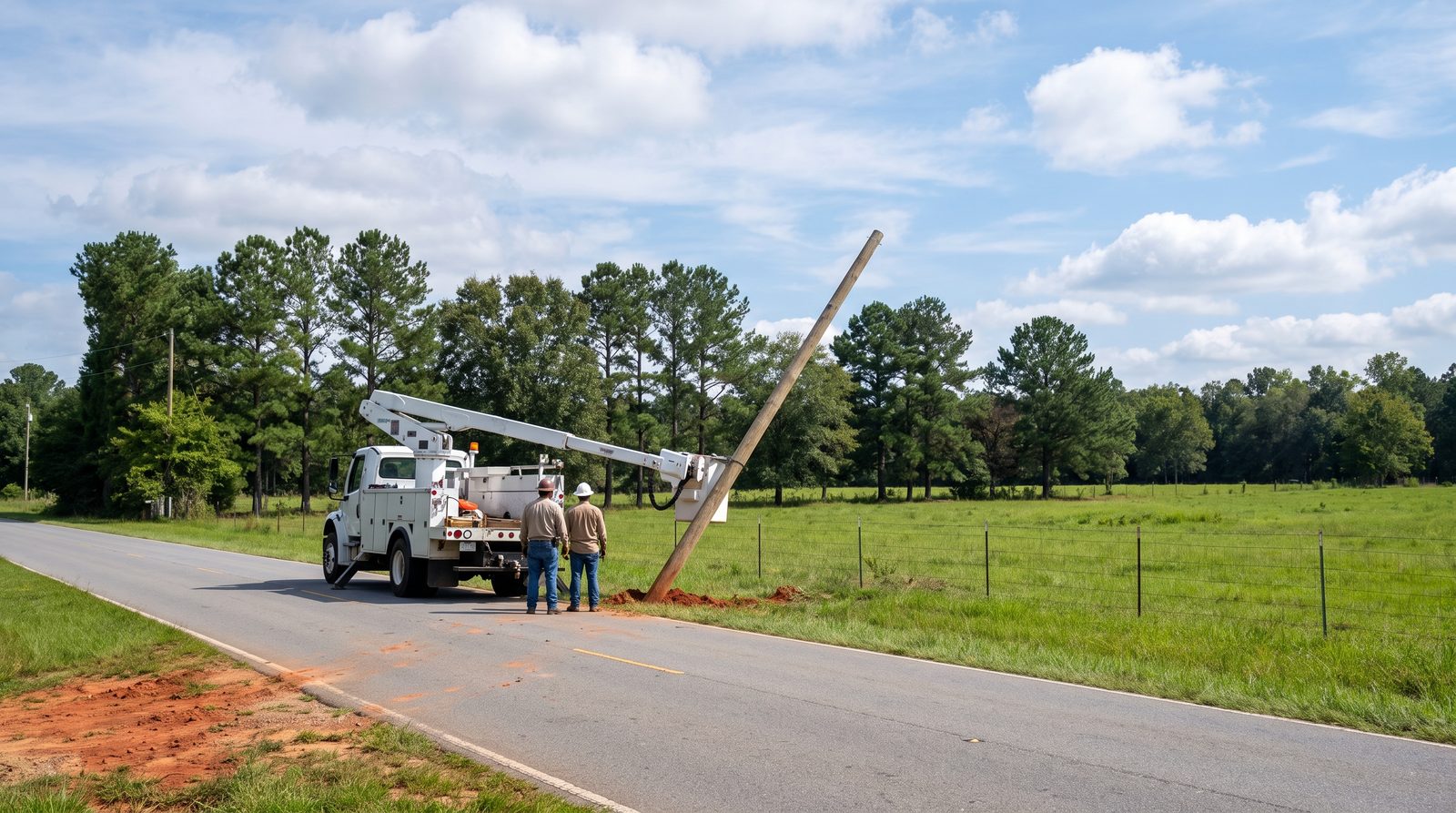
An empty lot needs power before a house can go up, and the first question is which utility serves it: Duke Energy, an electric cooperative or a town-owned utility. Each sets its own rules for new service and for who pays to run a line. When a lot has no power at the road, bringing the line in is the family's cost, not part of our price, so it's worth understanding before you buy the land.
Which utility serves a Triangle lot?
The town name on an address doesn't settle it. North Carolina has 26 locally owned electric cooperatives, and according to their statewide service area map, co-ops serve 93 North Carolina counties and about 45 percent of the state's land. Co-ops that serve parts of the counties around the Triangle include Wake Electric (based in Wake Forest), Piedmont Electric (Hillsborough), South River EMC (Dunn), Central Electric (Sanford) and Randolph EMC (Asheboro).
Wake Forest runs its own utility: Wake Forest Power is a division of the Town of Wake Forest and serves nearly 9,000 homes and businesses.
So the same county can hold lots served by three different providers, with three different sets of rules about the line.
How does new service get set up?
On a Duke Energy lot, Duke's builder page lays out the steps for the builder: a 911 address from the city or county, a temporary service pole and meter base set by the builder's electrician, an electrical inspection, and then a work order sent to Duke through its online Builder Portal.
The co-ops add steps of their own, several of which involve the owner:
- Wake Electric. Under its Service Rules and Regulations, effective September 1, 2025, service starts with an online membership application that the co-op approves before power is connected. Its schedule of charges lists a $5.00 membership fee, a $20.00 connection charge and a $50.00 residential temporary service charge, and a deposit may be required. The owner also signs any right-of-way easements the co-op needs (permission to place and reach its lines on the land). Its new-construction page says builders must have a signed, current Underground Construction Release Form on file before any services are built.
- South River EMC. A rules and line extension policy posted on its website (file dated 2022) says service starts once the application is complete, ID and proof of ownership or lease are shown, and any money owed, including any construction contribution, is paid. A new home needs a $375 deposit.
- Piedmont Electric. For a site with no power yet, Piedmont's service page points to its new-construction request, which asks whether the temporary pole is set and what service size the house needs.
Good to know: expect a form or two with your name on it, such as a co-op membership or an easement for the line across your land.
Who pays to run the line to the house?
Two terms help here. The main (or primary) line is the larger line along the road or into a neighborhood. The service wire is the shorter line from that main line to the house. Money an owner pays toward the utility's construction is often called a contribution in aid of construction.
Wake Electric pays a set dollar amount toward the main line. Its Line Extension Plan, effective June 1, 2016, says the co-op pays to bring facilities to the property line for a "Qualifying Meter," a new meter averaging at least 500 kWh a month, within reasonable limits. Past the property line, main-line extensions are charged to the owner, as is a main line that doesn't follow a public road or NCDOT right-of-way. The plan gives up to $2,000 per new Qualifying Meter toward main-line costs, usable once per meter per recorded parcel. As of 2016, overhead service wire was free with one lift-pole, and underground service cable up to 150 feet cost $175.00. The co-op decides overhead or underground; an owner who asks for underground pays the costs. Rock, stream crossings or blasting add charges.
South River EMC uses free distances instead. Its posted policy, which says fees may be updated every year, lists for homes:
- Overhead main line: no charge for the first 500 feet, then $6.00 per foot
- Underground main line: no charge for the first 200 feet, then $9.00 per foot
- Overhead service wire: no charge up to 150 feet, then $9.00 per foot
- Underground service wire: no charge up to 100 feet, then $7.00 per foot
Overhead main line along NCDOT-maintained roads outside residential developments isn't counted toward the cost. A residential contribution of $5,000 or less can be paid in up to six installments of at least $100 each; a contribution over $5,000 must be paid in full before construction.
The two systems aren't comparable, so one co-op's numbers say nothing about another's, or about Duke's or a town utility's.
What makes a power line cost more?
The same things come up again and again:
- How far the house sits from the existing main line
- A line that follows a private road instead of a public one
- Underground service, when you want it or a town requires it
- Rock, streams or wet ground along the route
Your next step: because the line is your cost, ask the utility that serves the lot for an estimate before you close on it, and weigh it alongside the price of the land.
Sources
- Our Members / Find Your Co-op · North Carolina's Electric Cooperatives
- NC Electric Cooperatives service area map (PDF) · North Carolina's Electric Cooperatives
- Wake Forest Power · Town of Wake Forest
- Service Rules and Regulations · Wake Electric Membership Corporation · September 1, 2025
- New Construction and Building · Wake Electric · January 10, 2025
- Service Rules & Regulations and Line Extension Policy · South River EMC
- Start, Stop or Move Service · Piedmont Electric Cooperative
- Line Extension Plan, Rev. 18 · Wake Electric Membership Cooperative · June 1, 2016
- Builders: Apply for Electric Service · Duke Energy